
Aluminium Casting Of Vur Box & Cover
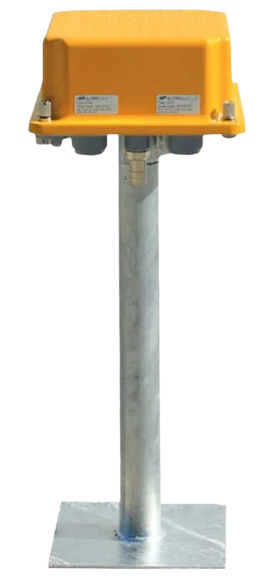
Aluminium Casting Of Vur Box & Cover
The Aluminium Casting of VUR (Valve Utility Regulator) Box & Cover is a robust and precision-engineered component designed for use in industrial, electrical, and mechanical applications. Manufactured using high-quality aluminium alloys through advanced casting processes, these products ensure superior strength, corrosion resistance, and dimensional accuracy. The VUR Box serves as a protective housing, while the Cover provides a secure closure, safeguarding the internal components against environmental and mechanical stress.
These castings are widely used in automotive, electrical enclosures, machinery housings, valve assemblies, and heavy engineering industries, where durability and reliability are critical
- High-Quality Material
- Corrosion & Weather Resistance
- Precision Casting
- Durability
- Thermal & Electrical Conductivity
- Customizable
Typical Assemblies
Base box (one-piece casting) with bosses for fasteners/conduits.
Cover/lid (cast) — flat or domed, optionally recessed for label plate.
Gasket (nitrile/EPDM/silicone) seated in a machined groove.
Fasteners (SS304/316) captive or loose; optional anti-tamper.
Conduit/port fittings (as required): threaded bosses or blanked pads.
Grounding/Bonding provision for electrical variants.
2. Specifications
A356.0 / 356.0 (Al-Si7Mg) – excellent all-round mechanicals; common for sand/permanent-mold casting. EN equivalent EN AC-42000 / 42100; UK LM25. Warner Brothers Foundry Company MakeItFrom Iron Foundry
LM6 / AlSi12 – superior fluidity for thin walls; good corrosion resistance; used where fine detail is needed. EN families EN AC-44100/44200/44300 (AlSi12 variants). Iron Foundrydolincasting.comalteams.com
Standards & compliance (select per use case)
ASTM B26/B26M for aluminium-alloy sand castings (general requirements). ASTM International | ASTMAntpedia
EN 1706 for chemical composition & mechanical properties of aluminium castings (EU). iTeh Standards+1
Ingress Protection per IEC 60529 when the box acts as an enclosure (e.g., IP54–IP67 depending on gasket & fastener design). IECIntertek
Process
Sand casting or gravity die/permanent-mold (for better surface and consistency).
Heat treatment: T6 (solution + age) for A356 to maximize strength; as-cast for LM6 unless specified.
Mechanical (A356-T6, typical targets)
UTS 240–310 MPa; YS 170–230 MPa; Elongation 3–10% (final acceptance per lot test & drawing). (Refer to EN 1706 table/ASTM alloy tables for exact acceptance ranges.) iTeh Standards
Dimensional & tolerance
Casting tolerance to ISO 8062-3 CT grades (e.g., CT8–CT10 for sand; tighter for permanent-mold). Machined features per drawing (±0.1–0.2 mm typical). (EN 1706 references ISO 8062-3 as a companion standard.) iTeh Standards
Sealing/IP
Grooved cover with continuous nitrile/EPDM gasket; target IP54–IP67 depending on application and test plan. IECKeystone Compliance
Surface finish
As-cast Ra 6.3–12.5 μm (process-dependent).
Shot-blast + powder coat (polyester/epoxy-polyester) for UV/corrosion resistance—common on weatherproof boxes. (Typical of commercial weatherproof die-cast boxes.) legrand.usPrisma Electrical Controls Corporation
Environmental
Operating temp −40 °C to +100 °C (verify elastomer & coating selection). Prisma Electrical Controls Corporation
Fasteners
SS304/316 per ISO 3506; thread inserts if frequent servicing is expected.
3. Drawings
GA (General Arrangement) – overall dims, mass, mounting points, ingress/egress.
Casting drawings – draft angles, parting line, feeders/gates (supplier docs).
Machining drawings – hole charts, thread callouts, flatness, gasket groove.
Cover drawing – thickness, ribs, fastener pattern, seal detail.
BOM – lid, gasket, screws, inserts, labels.
QA plan – alloy certs, heat-treat certs, dimensional report, IP test (if applicable).
Marking – part no., heat/batch, logo, date code.